
Plasterboarding and Dry Lining, Boarded to Skimmed
Ceilings, stud walls, dot and dab and insulated linings across Atherton and the surrounding towns, finished by the plasterers who board them.
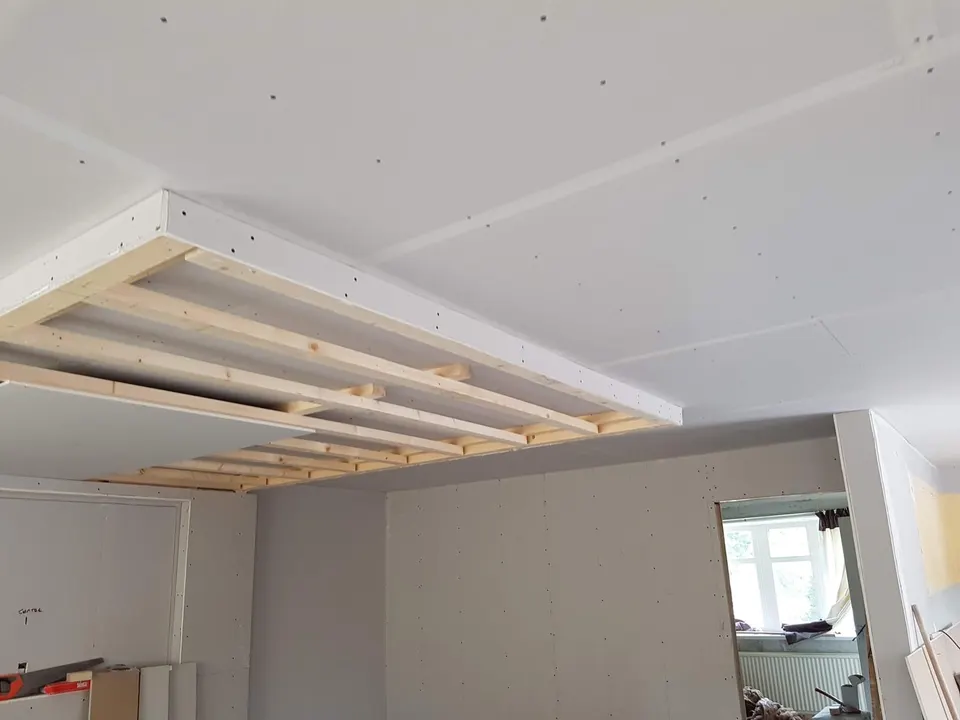
Plasterboarding, Start to Finish
Plasterboard is how modern walls and ceilings get built, and how old ones get rescued. We board out lofts, garage conversions and extensions, put up new ceilings over failed ones, dry line rough brickwork with dot and dab, and build stud walls where a room needs splitting. Then we tape, skim and finish the boards we hung.
That last part matters. Boarding done by one trade and skimmed by another is where humps, proud screws and cracked joints come from. When the person hanging the board is trowelling it up two days later, the levels get checked twice and the fixings go where they should.
We work across Atherton, Tyldesley, Leigh, Westhoughton and the wider patch, on everything from a single bedroom ceiling to a full house refurb. If the job includes a cold outside wall, insulated plasterboard can go on as part of the same visit, which is the cheapest point that upgrade will ever come at. Quotes are free and in writing.
- New ceilings and overboarded old ones
- Stud walls built, boarded and skimmed
- Dot and dab dry lining on brick and block
- Insulated plasterboard for cold outside walls
- Moisture-resistant board in bathrooms and kitchens
- Loft rooms, garage conversions and extensions
On the Job
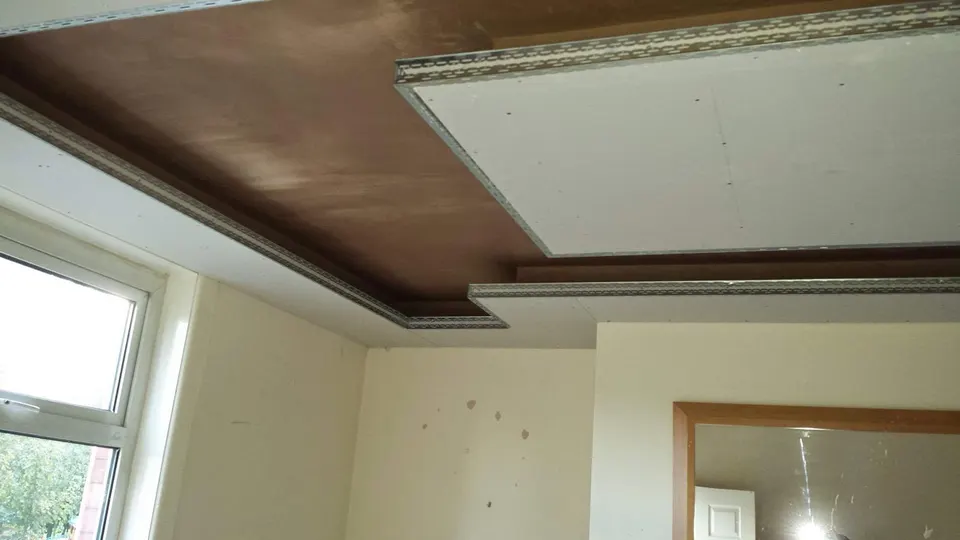
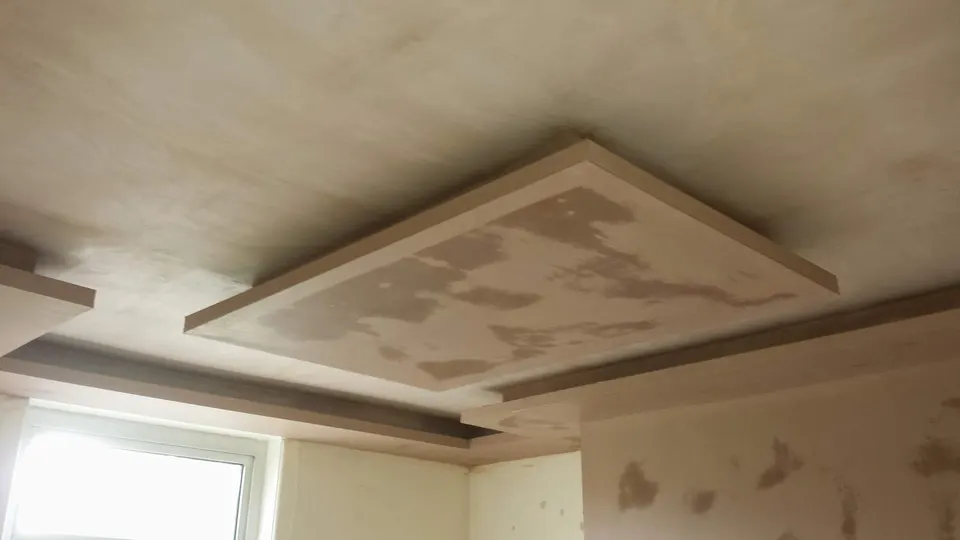
A finished floating ceiling job: boarded rafts, skimmed flat, with LED coves and downlights fitted after.
Ceilings: Overboard or Renew
Old ceilings fail in predictable ways round here. Lath and plaster in the pre-war terraces loses its key and starts to sag, and the early plasterboard ceilings in post-war houses crack along every joint. In most cases the answer is overboarding: fresh plasterboard fixed straight through into the joists, then skimmed. It’s quicker, cleaner and far less messy than pulling the old ceiling down.
Where a ceiling is too far gone, or there’s a reason to open it up anyway, we take it down, clear it and board fresh. Either way you end up with a flat ceiling with crisp lines, and we tell you which job yours needs after a look and a prod.
Dot and Dab, Stud Walls and Conversions
Dot and dab is the standard way to line a masonry wall: boards bonded to the brick with dabs of adhesive, giving you a straight, dry surface ready for skimming. It’s the usual fix for rough or hacked-off walls in older houses, where flattening the brickwork with wet plaster would take days and cost more.
Stud work covers the rest. New partition walls to split a big bedroom, boxing in pipework, building out a wardrobe wall, and the boarding side of loft and garage conversions. We work to the builder’s structure or put up the studs ourselves on smaller jobs, then board, insulate where specified, tape and skim.
Insulated and Specialist Boards
Board choice is a cheap decision with a long payback. Insulated plasterboard on a cold gable or north-facing wall stops condensation and cuts heat loss, and it’s the usual fix on the solid-wall terraces this area is built from. Moisture-resistant board belongs in bathrooms and kitchens. Acoustic board takes the edge off a noisy party wall. Fire-rated board goes where the regs ask for it, like garage conversions.
We spec the board for each wall rather than the same sheet everywhere, and the quote says which board is going where and why. If you’ve got a cold, mouldy back bedroom, our condensation and mould page covers how an insulated lining deals with it.
Taped Joints or Full Skim
There are two ways to finish plasterboard. Tape and joint fills and feathers just the joints and screw heads, which suits garages, utility spaces and anywhere function beats looks. A full skim coats the whole surface in plaster for a solid, joint-free finish that takes paint well, and it’s what we recommend for living spaces.
We price both. A skimmed finish costs a little more and earns it in any room you live in, and because the boarders are the plasterers, the skim goes onto boards that were hung flat to start with.
Plasterboarding & Dry Lining FAQs
Overboarding suits most tired ceilings: new board fixed through into the joists over the old surface, then skimmed. It keeps the mess down and the old ceiling adds a bit of sound and heat insulation. Pulling down is for ceilings that are sagging badly or hiding problems. We tap it, look and tell you which yours needs.
Dry lining means boarding a wall and finishing the boards, instead of building the surface up in coats of wet plaster. It’s faster, lighter and lets you add insulation, and on rough old brickwork it’s usually cheaper too. Wet plastering still wins in some spots. We do both, so the method fits the wall rather than the other way round.
On a cold outside wall, almost always. It warms the surface, which stops condensation and mould, and it cuts heat loss from the room. Done as part of a boarding job you’re having anyway, the extra cost is small. On internal walls it does nothing for you, and we’ll say so.
No. Boarding over damp traps it, ruins the new boards and pushes the moisture somewhere else. We do damp proofing as well, so the moisture gets found and fixed first, then the wall is boarded and skimmed once it’s sound. That order is what lasts.
A typical single room, boarded, skimmed and cleaned up, runs two to three days depending on what’s being boarded and how much prep the structure needs. Bigger conversions take longer, and the written quote includes the timeline.
Plasterboarding Where You Are
We work within about half an hour of our Atherton base. Pick your town for the local detail.
Atherton
Plasterboarding in Atherton, covering Hag Fold and Howe Bridge.
→Tyldesley
Plasterboarding in Tyldesley, covering Shakerley and Gin Pit.
→Leigh
Plasterboarding in Leigh, covering Pennington and Westleigh.
→Astley
Plasterboarding in Astley, covering Higher Green and Blackmoor.
→Hindley
Plasterboarding in Hindley, covering Hindley Green and Castle Hill.
→Westhoughton
Plasterboarding in Westhoughton, covering Wingates and Daisy Hill.
→Walkden
Plasterboarding in Walkden, covering Hill Top and Walkden North.
→Little Hulton
Plasterboarding in Little Hulton, covering Peel and Wharton.
→Worsley
Plasterboarding in Worsley, covering Boothstown and Ellenbrook.
→Farnworth
Plasterboarding in Farnworth, covering Kearsley and Stoneclough.
→Golborne
Plasterboarding in Golborne, covering Lowton and Lane Head.
→Bolton
Plasterboarding in Bolton, covering Over Hulton and Deane.
→Wigan
Plasterboarding in Wigan, covering Ince and Scholes.
→Horwich
Plasterboarding in Horwich, covering Blackrod and Middlebrook.
→Swinton
Plasterboarding in Swinton, covering Pendlebury and Wardley.
→Related Services
Plastering
Skims, re-skims, boarding and making good, finished flat and ready for paint.
→
Condensation & Mould Treatment
Black mould dealt with at the cause: cold walls warmed, surfaces treated and refinished.
→
Skimming & Re-Skims
Walls and ceilings taken back to smooth, over old plaster, fresh board or tired paint.
→